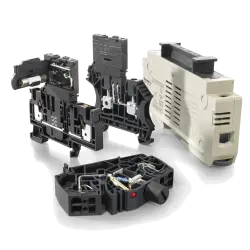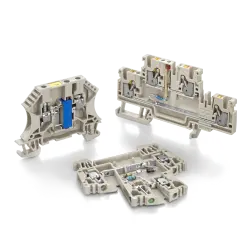
For some applications in the control cabinet or electrical switchgear, it is advantageous to protect the feed-through connection with a separate fuse. Fuse terminal blocks with a fuse holder for the DIN rail consist of a terminal block base and a fuse link carrier for various fuse links for AC and DC fuses.
The fuses vary from hinged fuse holders to plug-in fuse holders, screwable closures to flat plug-in fuses for cars and car mini fuses with and without LED status display. The fuse used limits the rated data (rated current and rated voltage) or the Low Leakage Current – LLC of the fuse terminal block.
Sensors and actuators can be wired safely and quickly with a simple “CLICK.” The compact Klippon® Connect fuse and disconnect terminal blocks are now also available with the innovative SNAP IN connection system. A special feature of the terminal blocks is the wide range of cross-connection options, which are located in front of and behind the separate or security area. These offer maximum flexibility to easily and reliably multiply potentials or signals – perfectly matched to the growing requirements and variety of signals in modern panel building.
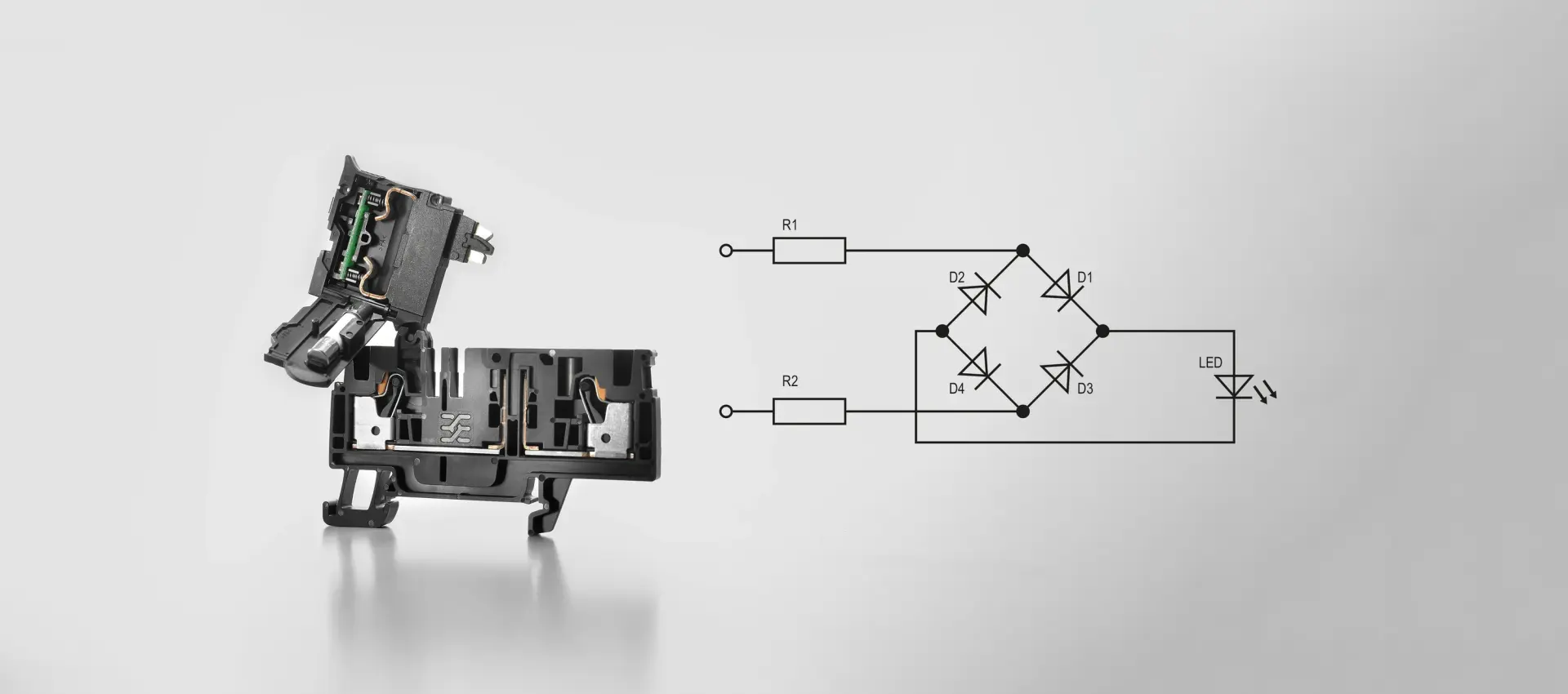
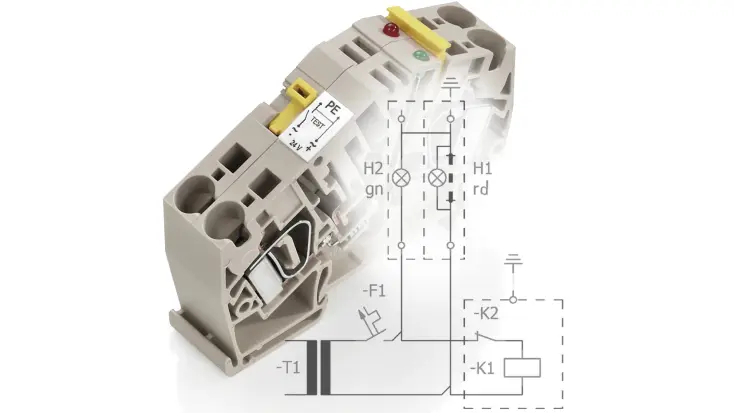
The LED circuits of the fuse terminal blocks (Blown Fuse Indication – BFI) are connected in parallel with the fuse, so that current only flows through the indicator when the fuse blows. In Weidmüller’s BFI circuits, the following current flows a minimum leakage current (Low Leakage Current – LLC) of less than 500 μA – not enough to pose a safety hazard or to erroneously activate the digital inputs of PLCs or DCSs.
The W-series terminals with screw connection, Z-Series terminals with tension clamp connection and A-Series terminals with PUSH IN connection have integrated fuse holders with BFI (Blown Fuse Indication) circuit and LLC (Low Leakage Current less than 0.5 mA) in case of a fault. The rated data of the fuse terminal and the exact leakage current or low leakage current are limited by the fuse or voltage variant of the fuse terminal block.
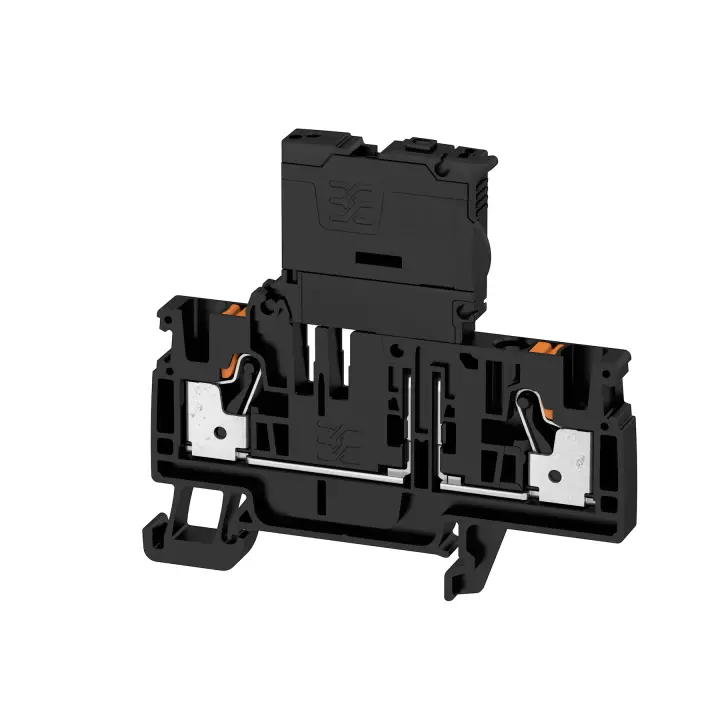
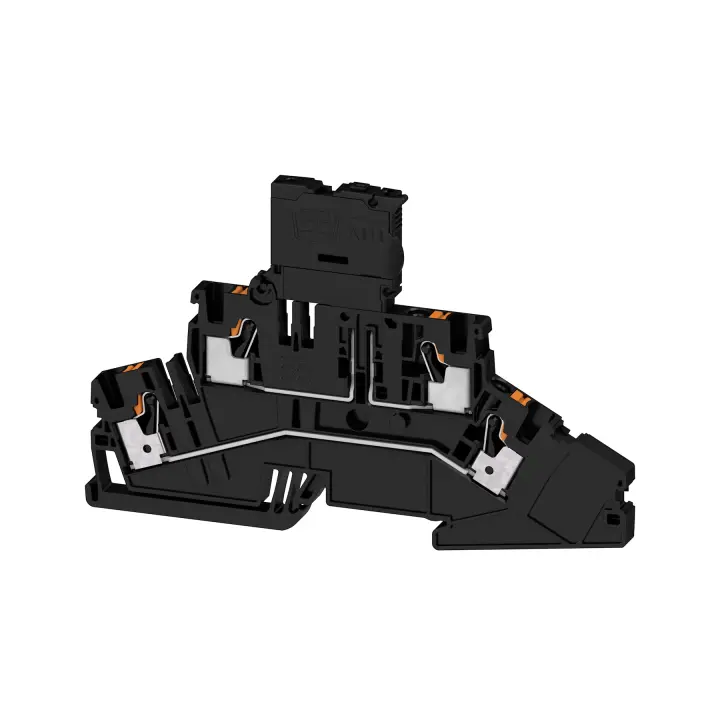
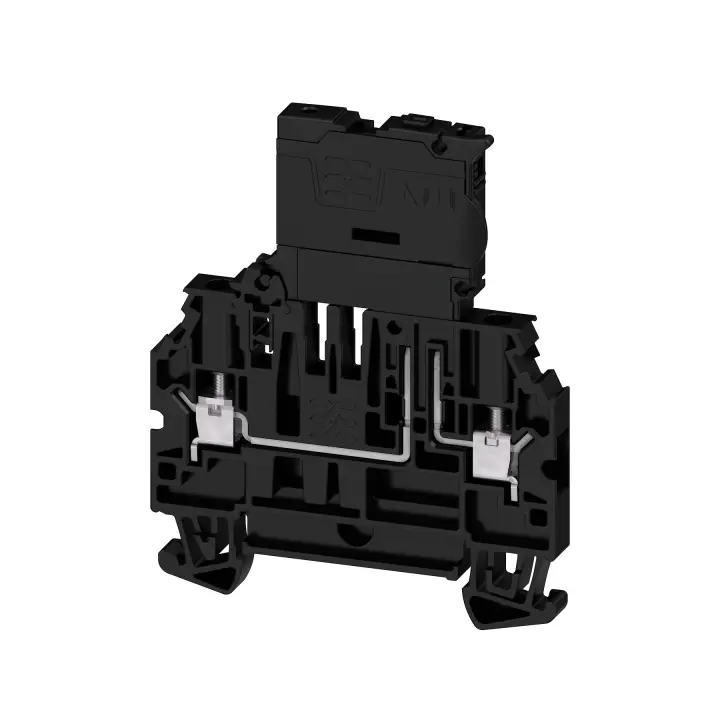
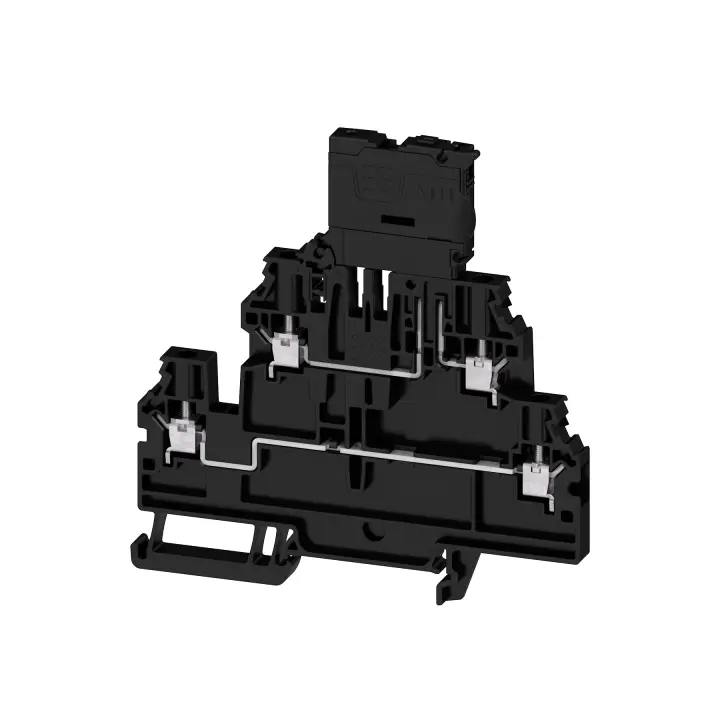
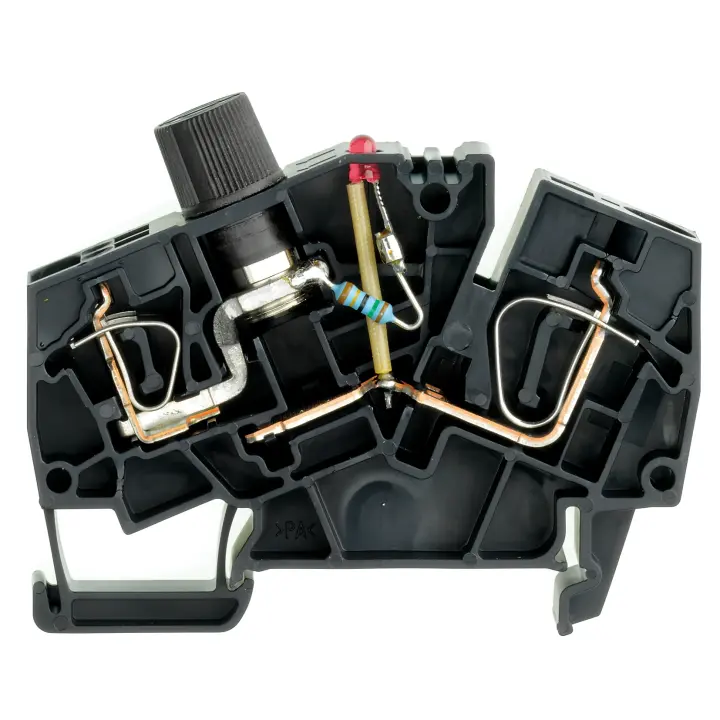
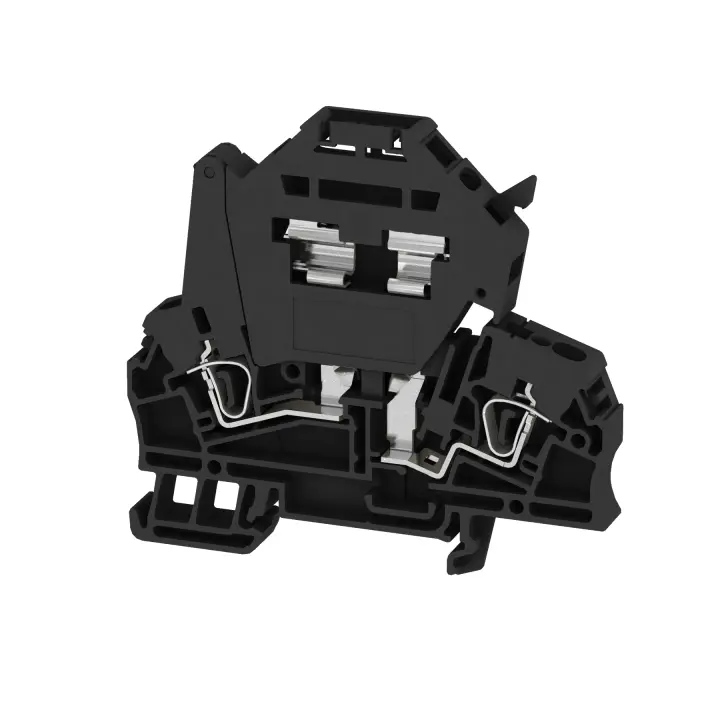
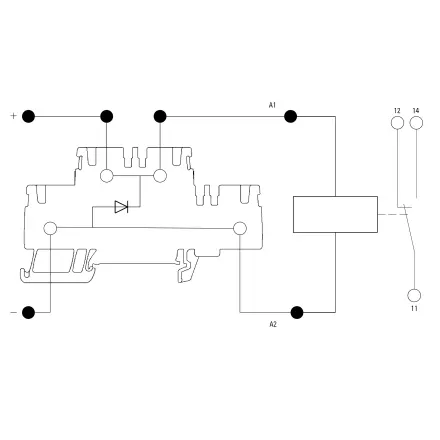
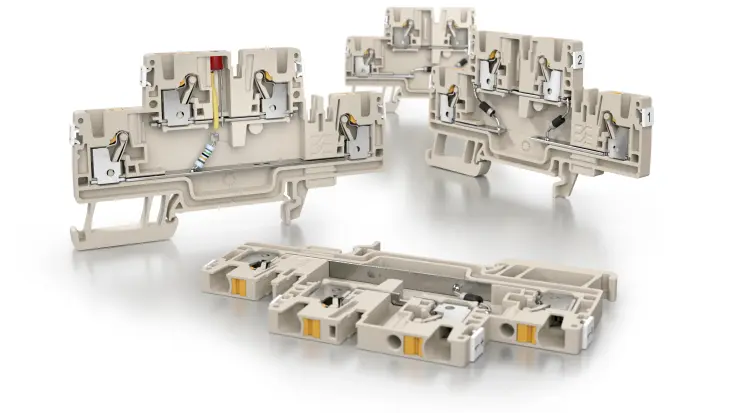
Integrated blocking diodes protect components against reverse currents or resistances. Voltage peaks or overvoltages can be effectively counteracted.
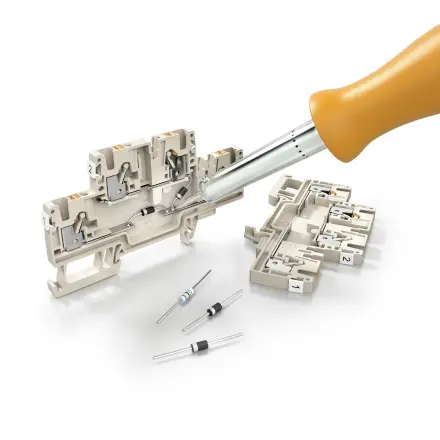
Electronic components can be integrated into the different versions of the basic modular terminal block in accordance with the specific application. Numerous, easily accessible contact points allow the components to be soldered in.
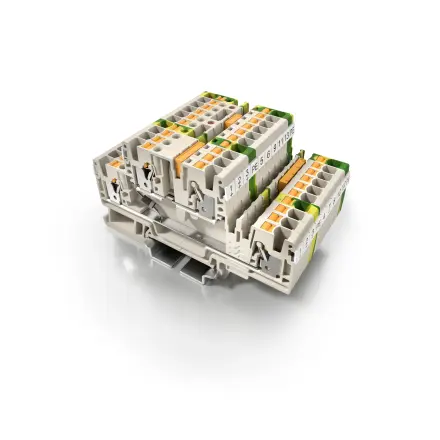
The design of the A2T 2.5 EM has the same contours as the standard double-level terminals of the A-Series. Accessories such as the end plate can be adopted and potentials can be multiplied via the cross-connection channel.
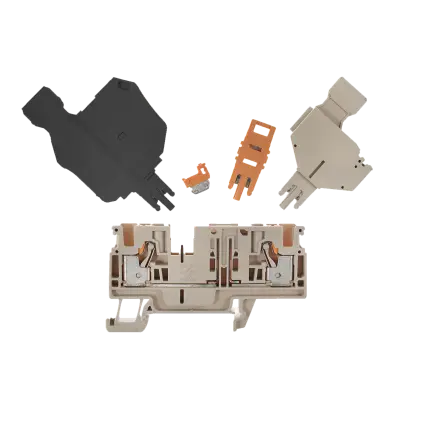
The multifunctional disconnection areas allow the insertion of fuse holders (SIHA) or component plugs (BEST). In this way, test-disconnect terminal blocks can be converted to fuse terminal blocks or to terminal blocks with electronic components.
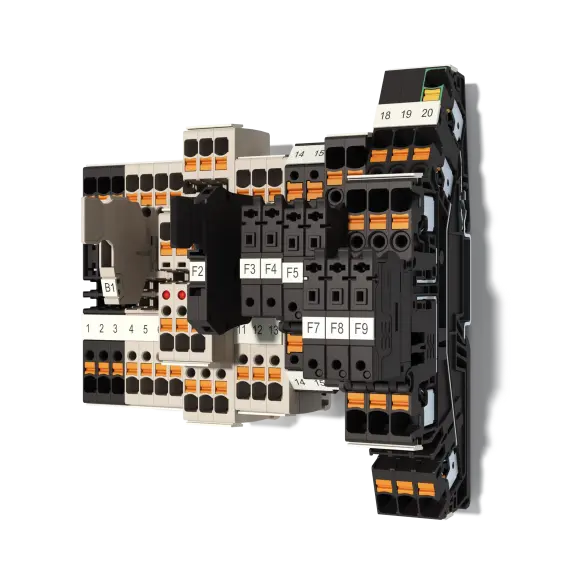
Our tailored fuse, disconnect and feed-through terminal blocks are the ideal solution for central control voltage distribution and surge current protection.
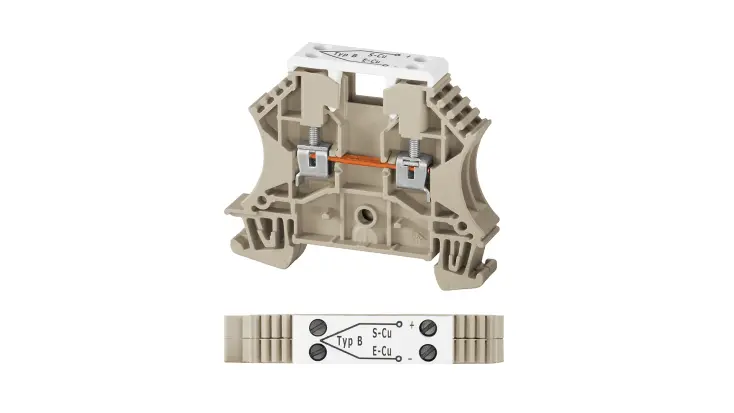
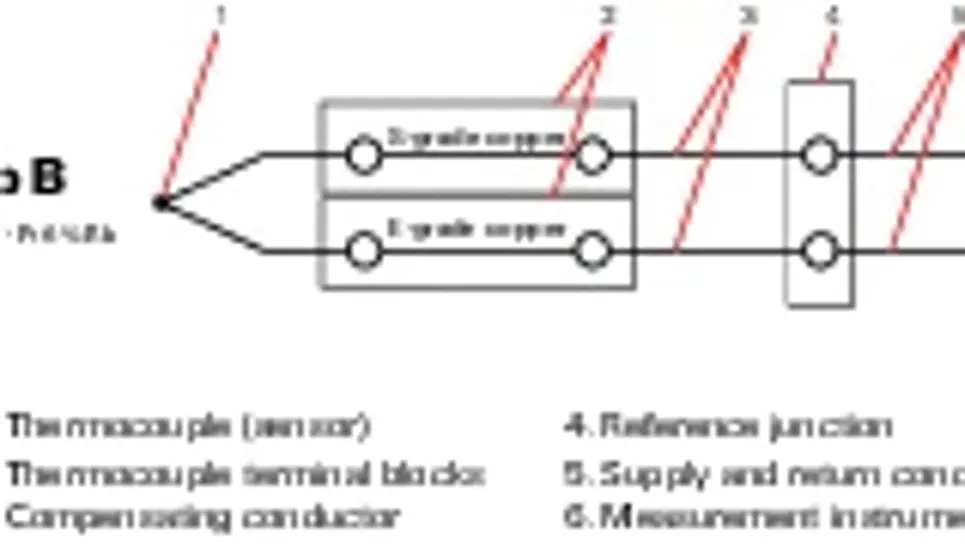
The thermocouple terminals shown in the measuring circuit are used for the thermoelectric transmission of the thermoelectric voltage from the thermocouple to the reference junction and the indication unit via the compensating wire. Thermocouple terminals are required for constructing a temperature measuring circuit.
On the website Engineering Data you will find an extensive selection of downloads related to CAT data. A wide range of digital product data is available for engineering systems, such as EPLAN (EPLAN Electric P8 and EPLAN Pro Panel), Zuken E3.series, WSCAD, and many others, to help you quickly integrate our products into your design. This data enables precise representation of terminal blocks with electronics such as double level diode terminals, terminals with diodes, resistors, varistors, or even for measurements with thermocouple fuse terminals or a 2-wire fuse terminal or fuse terminal blocks with pivoting fuse holders for 5x20 miniature fuses, and display all relevant electrical and operational characteristics.
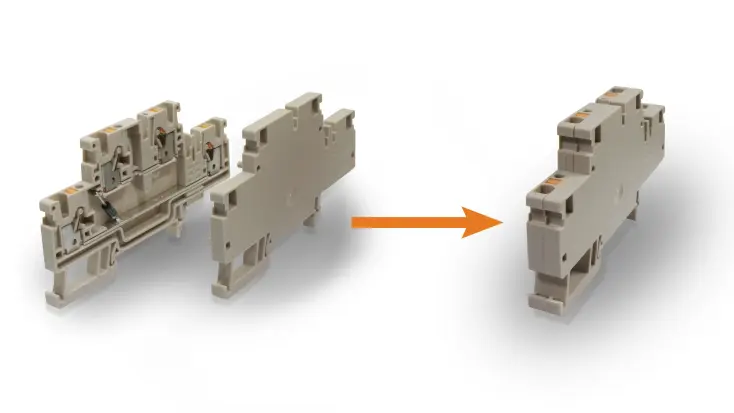
The spacer plate has an innovative design with the same shape as the terminal. This meets the space requirements for the customer’s own welding components while helping dissipate heat and increase the available current. The spacer plate is also designed as a detachable structure in the middle, allowing space expansion when larger components are installed. It can also be installed freely even if a cross-connector is required.